


Rental Calculator BallparkDeal
4.15.00 Reviews
App Specs
- Version
- 5.0.15
- Updated On
- License
- Free
- Downloads
- 10,000+
- Developer
- BallparkDeal, LLC
- Categories
- Finance
- Platform
- Android
Screenshots

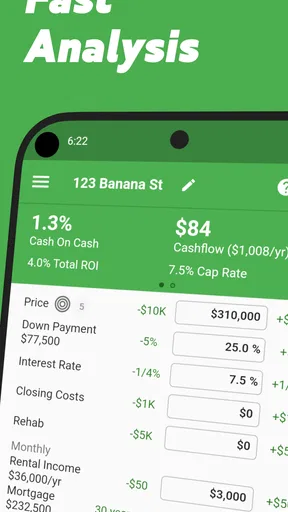
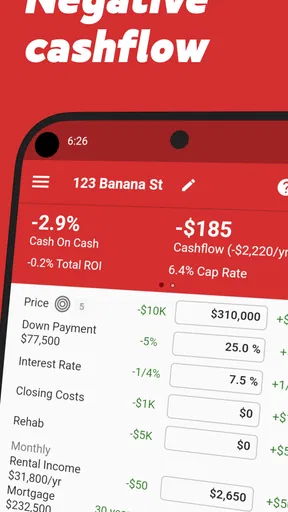

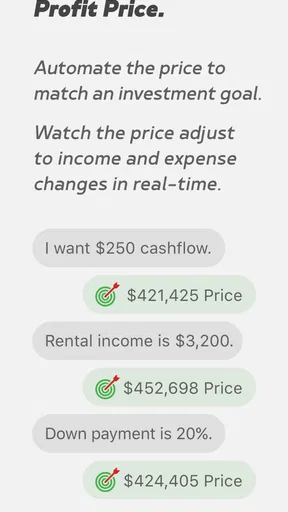
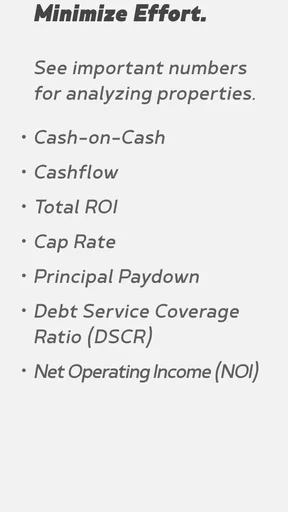
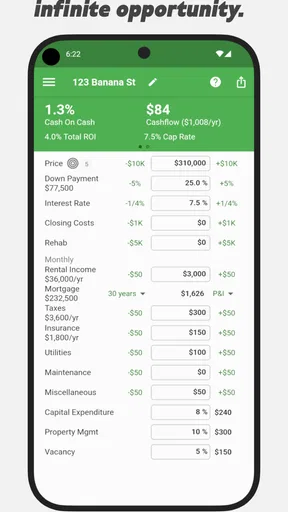
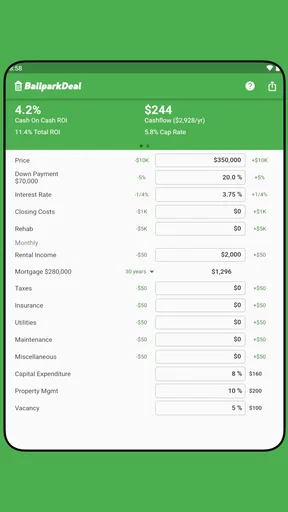
 Analysis by AppCompare
When I look at a rental property, I usually want a quick answer before I am ready to build a full spreadsheet: does this deal appear sensible, or does the asking price already make the numbers uncomfortable? Rental Calculator BallparkDeal is designed for that early decision. It is a finance app from BallparkDeal, LLC, aimed at real estate investors and agents who need a fast way to examine rental-property figures rather than manage an entire portfolio.
My first impression is that its value depends on using it at the right moment. This is not the tool I would choose as the final record for a complicated investment, but it can be useful when I am comparing listings, speaking with a client, or checking whether a property deserves deeper research. The word “ballpark” is important: I treat the result as a screening estimate, not a substitute for verified rent, insurance, taxes, financing terms, inspections, or professional advice.
How the current version fits into a property-buying workflow
The app is currently listed as version 5.0.15, and its basic role remains clear: turn rental-property assumptions into an analysis that is easier to interpret than mental arithmetic. I would use it near the beginning of a deal review, before spending time requesting documents or constructing a detailed model.
A practical workflow might begin with a listing price, an expected monthly rent, an estimate of operating costs, and the financing assumptions I am comfortable testing. I can then use the result to decide whether the property belongs on my shortlist. If it looks weak even under optimistic assumptions, I save time. If it looks promising, I move to a more careful review with actual figures.
That distinction makes the app especially suitable for agents who need to discuss a property without opening a large workbook in front of a client. It can also help a new investor understand which assumptions affect a deal. The useful habit is to change one input at a time instead of entering a single “best guess” and accepting the output immediately. That turns the calculator into a learning tool, not just a pass-or-fail button.
I would not rely on an attractive result until I have separated recurring costs from occasional costs. Property tax, insurance, maintenance, vacancy, management, utilities, association fees, and financing can behave very differently. A quick calculator can expose a weak deal, but it cannot make uncertain assumptions reliable. My strongest recommendation is to run a conservative case, a likely case, and an optimistic case, then compare how quickly the conclusion changes.
What feels useful for first-pass analysis
The main strength is speed. A traditional spreadsheet is more flexible, but it also encourages me to spend time designing formulas before I know whether the property is worth that effort. BallparkDeal reverses that order. I can first ask whether the opportunity deserves attention, then build a detailed model only when the answer justifies it.
Worth Reading Before You Choose

EA SPORTS FC Mobile 26 Is a Bigger Football Game, but It Takes Time

Flipboard Shows What News Apps Must Do Beyond the Feed

Switching to Android Auto Means Rethinking Your Driving Routine

Google Calendar Makes a Crowded Week Easier to Manage

Ludo King Makes the Most of the Minutes Between Plans

Baby Panda World Brings Quick Play to Modern Phones, but Its Game Library Feels Busy
This is also helpful when comparing properties with different profiles. A lower-priced home is not automatically better if its rent is weak or its expenses are high. Likewise, a more expensive property may deserve consideration if the income and operating assumptions support it. The app gives me a structured place to compare those assumptions instead of letting the purchase price dominate the conversation.
One less obvious use is checking how sensitive a deal is to vacancy. I can keep the purchase assumptions steady and test what happens when the expected income is reduced. If the result collapses after a modest change, I know the deal depends heavily on perfect occupancy. That is a more useful insight than looking only at a single headline return.
Another useful workflow is to test financing separately from property performance. I first consider the property as an income-producing asset, then examine how borrowing changes the outcome. This helps avoid confusing a favorable loan assumption with a genuinely strong property. If the deal works only under unusually generous financing, I would treat it as fragile and investigate further.
Changes and the significance of the present release
The current release is version 5.0.15. That tells me I am looking at a product that has moved beyond an initial launch build, rather than a brand-new experiment. The app was released on March 10, 2022, and its present version gives existing users a more mature point from which to judge the experience.
I would still avoid assuming that a higher version number means the calculator has every feature found in a full real-estate platform. Version progression can improve stability, presentation, or workflow without turning a focused calculator into a complete investment-management system. For me, the meaningful question is whether the current release lets me reach a sensible first-pass conclusion with less friction than my usual alternative.
For someone who used an earlier release, the practical effect of moving to the current version is best judged by everyday handling: how quickly assumptions can be entered, how clearly results can be read, and whether the process feels dependable enough for repeated screening. I would update before making a serious comparison, because an old installation may not represent the current experience.
There is also a useful boundary between confirmed product evolution and expectation. I can see that the app has reached its current release, but I would not promise future additions such as portfolio tracking, detailed tax treatment, market data, or advanced financing models. Those would be welcome in a broader product, yet they should not be treated as part of this calculator unless they are actually present in the version being used.
Who gets the most value from it
I think the best audience is a beginner investor who needs a repeatable way to ask, “Is this worth investigating?” It provides a more disciplined starting point than guessing from the listing price or relying on a property’s advertised rent. It is also a reasonable companion for an agent who wants to discuss rough rental economics during an early conversation.
Existing investors may appreciate it as a quick second opinion. I would not replace a carefully maintained workbook with it, but I could use it while reviewing a batch of listings. The time-saving benefit becomes more noticeable when the goal is to eliminate obviously unsuitable properties before gathering detailed documents.
The free entry price makes experimentation easier. The app is free to download, while in-app purchases are listed at $19.99 per item. I would begin with the free experience and decide whether any paid item genuinely improves my workflow. For occasional users, paying for a specialized calculator may be harder to justify than using a spreadsheet they already understand. For agents or active investors, the time saved during repeated screening may make the purchase more reasonable.
The Everyone content rating also makes the app broadly approachable from an age-rating perspective, but that should not be confused with financial simplicity. A young or inexperienced user can open it, yet the conclusions still depend on understanding property costs and uncertainty. I would explain every assumption to a beginner rather than presenting the result as a guaranteed investment outcome.
A realistic example of using it before a viewing
Imagine I am considering a small rental home that looks attractive in an online listing. Before arranging a viewing, I enter the expected rent and a cautious estimate of recurring expenses. The first result is only a starting point. I then reduce the expected income to account for possible vacancy and increase maintenance to reflect the age of the property.
If the deal remains reasonable across those tests, I have a better reason to continue. At the viewing, I would look for details that could change the calculation: the condition of the roof, heating equipment, windows, drainage, parking, and any shared-property charges. I would also verify whether the rent estimate matches nearby properties rather than relying on a hopeful figure.
If the result becomes unattractive as soon as I include realistic costs, I would not necessarily reject the property forever. I would ask whether the price can change, whether improvements could increase rent, or whether the property has a different strategic value. The app does not make that decision for me; it helps show which questions deserve attention before I commit more time.
This is where the calculator is more useful than a casual online estimate. It encourages me to connect income, expenses, and price in one conversation. Its weakness is that the quality of the conversation still depends on the figures I bring into it. A polished result based on poor inputs is still a poor analysis.
Where it falls short compared with spreadsheets and larger platforms
The usual alternative is a spreadsheet. A spreadsheet wins when I need custom formulas, detailed categories, depreciation schedules, scenario histories, or a permanent audit trail. I can also tailor it to a particular market and preserve notes beside every assumption. BallparkDeal wins on immediacy: I do not have to build the framework before checking a listing.
A larger real-estate analysis platform may offer broader data, portfolio reporting, loan schedules, document storage, and collaboration. That kind of service is more appropriate when I manage several properties or need reports for partners. A focused calculator is easier to approach, but it should not be mistaken for a complete operating system for property investing.
There is a trade-off here that is easy to miss. Simplicity reduces setup time, but it can also make it tempting to overlook a cost that is not represented in the workflow I am using. My solution is to keep a short checklist beside the app: vacancy, repairs, capital improvements, insurance changes, taxes, management, utilities, financing, and legal or compliance costs. I use the calculator for the first filter and my broader records for the final decision.
I would also choose another option if I need to compare many properties over time, export a detailed history, or show a lender exactly how every figure was derived. The app is better suited to fast evaluation than formal documentation. That is not a flaw in itself, but it matters when deciding whether it belongs at the center of an investment process.
Remaining gaps and the friction I would expect
The biggest limitation is the unavoidable dependence on estimates. Rental income can change with season, condition, location, and competition. Maintenance can be quiet for months and then arrive as a large bill. Financing assumptions can shift the result dramatically. A calculator can organize these variables, but it cannot validate them for a particular property.
I would also be cautious about treating one output as a complete measure of profitability. Cash flow, return on invested capital, long-term appreciation, liquidity, risk, and personal tax circumstances are different questions. A property can look acceptable in one measure and uncomfortable in another. I use the app to narrow the conversation, not to end it.
The paid-item model deserves attention as well. Since individual in-app purchases are listed at $19.99, I would check what a purchase adds before committing. A person who evaluates one or two properties a year may find a basic spreadsheet sufficient. Someone who works through listings regularly may place a higher value on convenience. The right choice depends on frequency and on whether the app removes enough repetitive work.
There is a human limitation too: fast entry can encourage false precision. When I type a rent estimate down to the last unit of currency, the screen may feel exact even though the estimate is not. I prefer rounded, defensible assumptions and clear notes about where they came from. That approach makes the result less impressive-looking but more honest.
How existing users can get more from the current release
My advice is to create a consistent input routine. Use the same order every time, separate known figures from estimates, and write down which assumptions are most uncertain. This makes comparisons between properties fairer. If one listing is analyzed with optimistic maintenance and another with conservative maintenance, the app may appear to favor the first simply because the inputs were treated differently.
I would also revisit a calculation after receiving new information. A confirmed insurance quote, a contractor’s repair estimate, or a more reliable rent comparison can change the conclusion. The app becomes more valuable when I treat an analysis as a living checkpoint rather than a permanent verdict.
For agents, I would avoid presenting a rough result as a promise to a client. Instead, I would use it to frame questions: what rent is realistic, what expenses are missing, and how much vacancy risk is acceptable? This keeps the conversation useful without overstating what a quick calculator can establish.
For beginners, the best learning exercise is to run deliberately different scenarios and observe which assumptions matter most. If a small change in rent completely changes the outcome, rent research deserves priority. If financing is the dominant factor, loan terms need closer attention. This turns the app into a way to identify research priorities, which is more valuable than memorizing a single return figure.
What I would watch before making it a long-term tool
I would watch how well the current release continues to fit changing investment habits. A focused rental calculator remains useful if it stays quick, readable, and honest about the limits of rough analysis. I would also pay attention to whether future updates make repeated comparisons easier without burying the simple workflow that gives the app its appeal.
Potential improvements would matter most if they supported better decision-making rather than merely adding more fields. Clear scenario comparison, easier assumption notes, and a transparent way to distinguish estimates from confirmed figures would strengthen the product. I would welcome broader capability, but not if it made a quick screening task feel like completing a financial report.
At the same time, I would not choose this app solely because it has a mature-looking version number or a visible user score. It holds an average rating of 4.1 from a small group of ratings, and the app has passed the ten-thousand-install mark. Those details suggest real interest, but they do not replace my own test with the types of properties I actually evaluate.
My final view is that Rental Calculator BallparkDeal is most convincing as a fast rental-property filter. I like the idea of reaching a first conclusion without building a spreadsheet for every listing, and I can see genuine value for beginners, agents, and investors screening several opportunities. The free starting point lowers the barrier, while the optional paid items mean frequent users should judge the convenience against their own routine.
I would recommend it to a friend with one condition: use it to ask better questions, not to avoid asking them. Verify rent, inspect the property, confirm expenses, test conservative scenarios, and move to a more detailed model when the deal becomes serious. If that is how you work, the app can save time and bring structure to the earliest stage of analysis. If you need portfolio accounting, detailed tax modeling, or formal investment documentation, a spreadsheet or full property platform will be the better home for the next stage.
Pros
- Quickly estimates rental property returns and deal potential.
- Simple interface suitable for beginners and casual investors.
- Useful for comparing multiple properties during initial screening.
- Helps organize key figures before a deeper financial analysis.
- Can support faster decisions when reviewing listings on the go.
Cons
- Ballpark estimates may overlook taxes
- repairs
- vacancies
- and financing costs.
- Results depend heavily on the accuracy of the figures entered.
- Not a substitute for professional investment or financial advice.
- Limited usefulness for complex properties or unusual rental arrangements.
- May require additional tools to verify market rents and property expenses.
FAQs for Rental Calculator BallparkDeal
What is Rental Calculator BallparkDeal used for?
Rental Calculator BallparkDeal is designed to help users estimate the potential costs and returns of a rental property. After entering figures such as purchase price, down payment, loan details, rent, operating expenses, and vacancy assumptions, the app can provide a quick ballpark view of cash flow and investment performance. It is intended for preliminary analysis rather than a guaranteed financial result.
Is Rental Calculator BallparkDeal suitable for beginners?
Yes, the app can be useful for beginners because it organizes common rental-property calculations in one place and presents the results in a more accessible format than a spreadsheet. However, new investors should understand what each input means before relying on the outcome. Estimates depend entirely on the accuracy of the information entered, so the calculator should support research rather than replace professional advice.
What information do I need before using the calculator?
To get a meaningful estimate, you should have basic details about the property and financing available. These may include the purchase price, expected monthly rent, down payment, interest rate, loan term, property taxes, insurance, maintenance, management fees, utilities, and an allowance for vacancies. The more realistic your assumptions are, the more useful the projected cash-flow and return figures will be.
Can BallparkDeal tell me whether a property is a good investment?
The calculator can help you compare projected income, expenses, cash flow, and selected investment metrics, but it cannot make the final investment decision for you. A property may appear profitable while still carrying risks involving location, tenant demand, repairs, changing interest rates, taxes, or legal requirements. Always verify the numbers independently and consider consulting a qualified real-estate, tax, or financial professional.
Are the results from Rental Calculator BallparkDeal guaranteed to be accurate?
No. The results are estimates based on the assumptions and figures entered by the user, so they should be treated as a starting point for analysis. Actual performance can differ because of unexpected repairs, empty periods, insurance changes, financing costs, taxes, market conditions, and tenant-related expenses. Before downloading or using the app for a purchase decision, review its terms and confirm important calculations with reliable sources.


